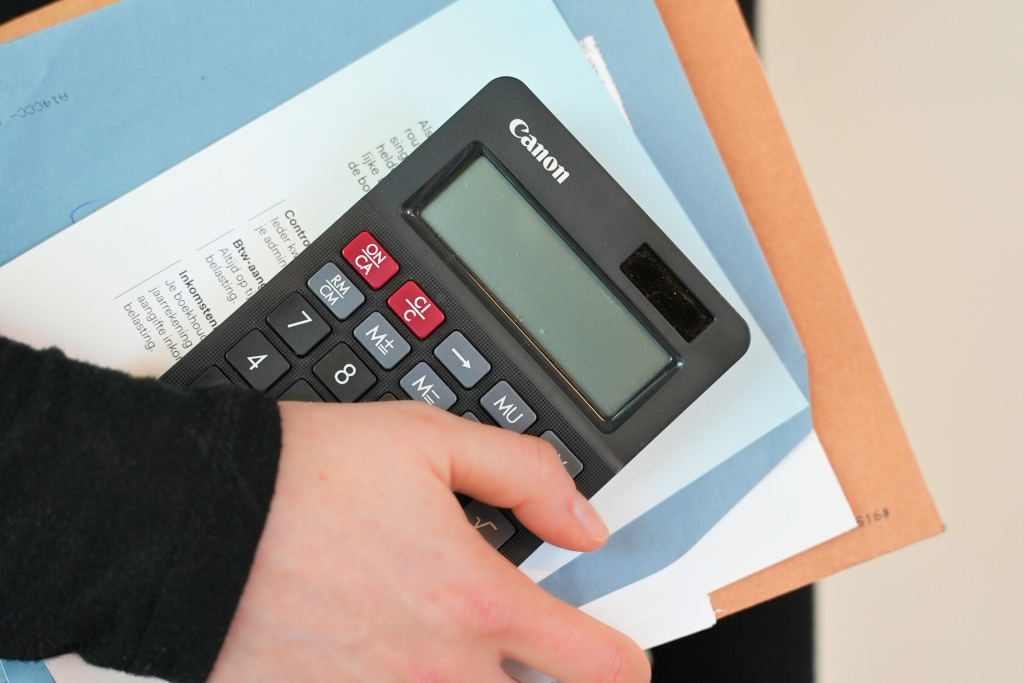
You’ve made the decision: you’re becoming an entrepreneur, or perhaps you’ve just officially started. Hooray! In the run-up to your official launch, you’ve likely already spent a fair amount of money. Good news: those expenses—known as start-up costs (aanloopkosten)—are often tax-deductible. In this blog, we’ll explain exactly how this works.
Lorem ipsum dolor sit amet, consectetur adipiscing elit. Ut elit tellus, luctus nec ullamcorper mattis, pulvinar dapibus leo.
1
Start-up costs are all the business expenses you incurred to get your company off the ground before you were officially registered with the Chamber of Commerce (KVK). Think of market research, domain name registration, business cards, or a consultation with an expert.
And yes, that expensive camera or laptop you bought as a private individual with the intention of using it for your business also counts. You can “sell” these items to your own business, so to speak. This is what we call contributing private assets to the business.
2
There’s more possible than you might think! You are allowed to claim costs and investments made up to five years before the year you started in your first tax return. Please note: this only applies to costs directly related to your business—the necessary professional expenses.
Did you invest in tools or equipment three years ago that now form the basis of your business? Be sure to keep that invoice!

Afbeelding: Zakelijke lunch meeting tussen ondernemers
Lorem ipsum dolor sit amet, consectetur adipiscing elit. Ut elit tellus, luctus nec ullamcorper mattis, pulvinar dapibus leo.
Lorem ipsum dolor sit amet, consectetur adipiscing elit. Ut elit tellus, luctus nec ullamcorper mattis, pulvinar dapibus leo.
3
Reporting start-up costs provides benefits on two fronts:
Note: For larger purchases (like that laptop), you must look at the current market value at the time you start. A three-year-old MacBook is, after all, no longer worth its original retail price. Furthermore, it is wise to consider whether you want to include larger purchases as an investment. You can read more about how that works here.
4
It sounds like a cliché, but without proof, there’s no deduction. The Tax Authorities (Belastingdienst) want to see that the costs truly had a business purpose. So, make sure you collect all invoices, receipts, and proofs of payment from the past few years.
Do you still have the receipt for your KvK registration? Add it to the pile. These kinds of costs might seem like small amounts, but added together, it’s a significant deduction you wouldn’t want to miss out on.
5
Now that you’ve gathered that pile of receipts, you’ll want to know where to enter them. Don’t worry, it’s not rocket science. You process start-up costs in your very first tax returns of the year you started:
Tip: start tracking your startup costs as early as possible. This keeps things organized and ensures you don’t overlook a single euro when filing your return. Are you already doing your bookkeeping with Kees de Boekhouder? Simply upload the expense and add ‘startup costs’ as a note in the description.
6
Did you make expenses in the run-up to starting your business? Don’t forget to take advantage of the tax benefits and get money back via your VAT return and income tax return. Does this feel like a complex puzzle to you? At Kees de Boekhouder, we’re happy to help you get off to a flying start. This allows you to focus on what you truly enjoy: entrepreneurship. Interested? Get in touch with us; let’s find out what we can do for you!
Scan je bonnetje en wij verwerken het automatisch correct in je administratie.

Bookkeeper at Kees de Boekhouder
After reading this article, could you still use some help with your bookkeeping? Perhaps Kees de Boekhouder is right for you! Schedule an online appointment to discover if Kees de Boekhouder’s approach suits your needs.
Kees de Boekhouder
“Easy-to-use and intuitive accounting software with friendly and helpful staff.”
(127 reviews)
These are all business expenses you made to get your company off the ground before your official KVK registration. Think of market research, your domain name, or a laptop you previously bought privately for your business.
You can claim business costs and investments made up to five years before your starting year in your first tax return. Make sure to keep your invoices from that period; they represent tax savings.
Absolutely! You can reclaim the VAT paid before your launch as input tax in your very first VAT return. It’s often a nice financial boost to kick off your business.
Schedule a non-obligatory, digital appointment with us.